


Choosing the right deep groove ball bearing manufacturer is essential for ensuring product quality, stable supply, and long-term performance. As a bearing manufacturing enterprise focused on global import and export, Jinan Lanyu provides reliable solutions across deep groove ball bearings, self-aligning ball bearings, and cylindrical roller bearings. This guide will help buyers, distributors, and industrial users understand how to evaluate manufacturers and select bearing products that match their operational needs.
In bearing trade, many supply problems do not begin with price. They begin with inconsistent quality between batches, unclear technical communication, incomplete traceability, or delivery promises that do not match production reality. Deep groove ball bearings are among the most standardized and widely used rolling bearings in the market, which creates a common misunderstanding: because the product category is mature, any manufacturer can supply it at an acceptable level. In practice, that assumption often leads to avoidable failures.
For importers, procurement teams, and industrial users, the real question is not simply who can make a bearing. It is which manufacturer can support the required operating conditions, quality consistency, documentation, and commercial reliability over time.
Why manufacturer selection matters more than many buyers expect
Deep groove ball bearings are used in electric motors, pumps, gearboxes, agricultural equipment, conveyors, fans, household machinery, and general industrial systems. Their applications range from low-speed, low-load environments to demanding conditions involving vibration, heat, contamination, or continuous duty cycles. In these cases, even small differences in material quality, raceway finishing, internal clearance control, heat treatment, and grease management can materially affect service life.
A manufacturer should therefore be evaluated not only by catalog breadth, but by how well it controls the production variables behind bearing performance. A supplier offering attractive pricing but weak process discipline may still be costly in the field through early replacement, machine downtime, warranty disputes, or customer claims in export markets.
What separates a capable deep groove ball bearing manufacturer from a trading-only source
There is nothing inherently wrong with working through a trading company, especially in cross-border procurement. Many import-export firms add value through consolidation, communication, logistics coordination, and after-sales support. The issue is transparency. Buyers need to know whether the source has real manufacturing control, audited factory relationships, or only spot-market access.
When evaluating a manufacturer or export-oriented supplier, several points deserve close attention:
- Production capability: Does the factory actually produce the bearing series being quoted, or outsource part of the range?
- Quality system: Is there a documented quality management process, and can inspection records be provided?
- Material stability: Are bearing steel grades and heat treatment processes controlled consistently?
- Dimensional and running accuracy: Can the supplier offer different precision grades based on application requirements?
- Batch traceability: Are lot numbers, packaging codes, and inspection references available?
- Export competence: Can the supplier handle documentation, labeling, packaging standards, and destination-market requirements?
In the global bearing business, the best partners are often not the ones with the lowest quote, but the ones that can answer these questions clearly and consistently.
How to assess product quality beyond the data sheet
Most catalogs look similar. Bore, outer diameter, width, clearance class, and tolerance grade can be listed by almost any supplier. The difficulty is that these parameters alone do not tell the full story of quality. Buyers should probe deeper into how the product is made and controlled.
Surface finish of raceways affects noise and friction behavior. Heat treatment consistency influences hardness distribution and fatigue resistance. Cage quality affects stability at speed. Internal cleanliness matters greatly for lubricant life and early wear. Seal quality, where applicable, directly affects contamination resistance.
That is why sample evaluation remains important, especially for new supply relationships. A practical approval process often includes:
- dimensional inspection against drawing or standard specification;
- noise and vibration testing for motor-related applications;
- radial clearance verification;
- material or hardness checks where needed;
- trial installation under real operating conditions.
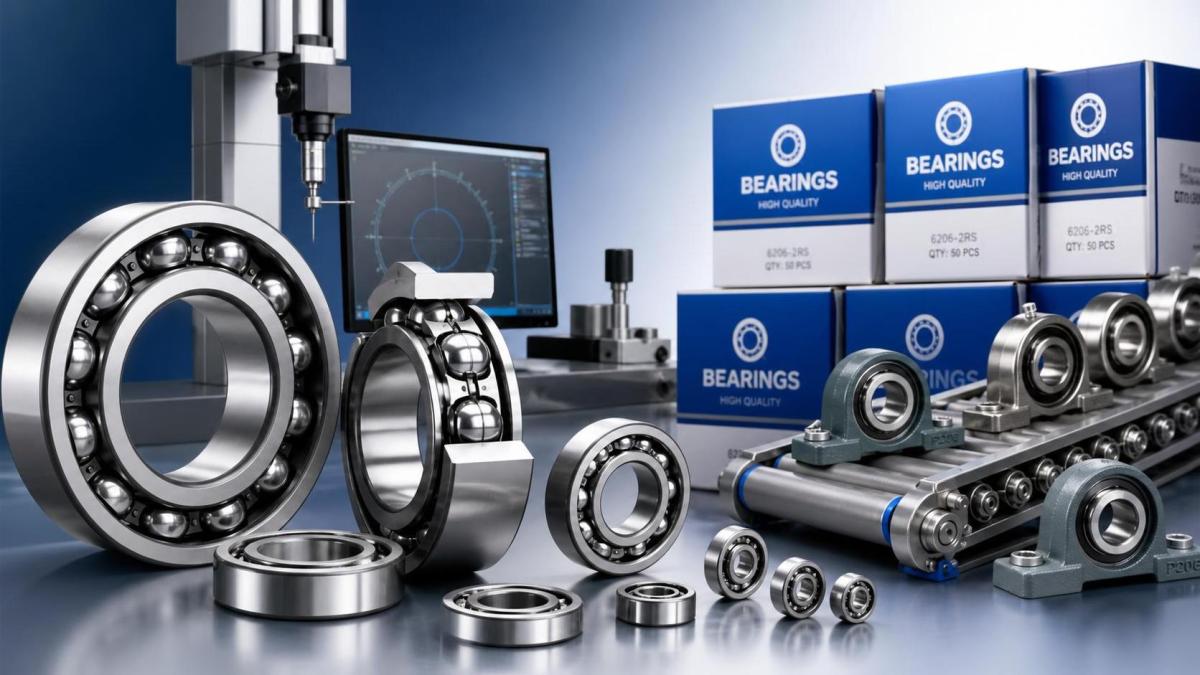
For example, a buyer sourcing a larger motor or gearbox bearing may review options such as FAG 6317-C3 Deep Groove Ball Bearing, which in one common specification uses chrome steel GCr15, steel cage construction, and an 85 mm bore, 180 mm outer diameter, and 41 mm width. On paper, those specifications are straightforward. The commercial value comes from whether the supplier can deliver the requested clearance class, precision grade, and batch consistency without deviation.
Internal clearance, precision grade, and why selection errors are common
One of the most frequent procurement mistakes is treating all deep groove ball bearings with the same dimensional designation as interchangeable under all conditions. They are not. Clearance class and precision grade can significantly affect performance.
Clearance selection is especially sensitive. A C3 bearing, for example, is often chosen for applications involving higher operating temperatures, interference fits, or elevated speeds, where internal clearance may reduce during operation. But using increased clearance where it is not needed can also create unwanted vibration or noise in certain assemblies. Likewise, choosing standard clearance without understanding thermal expansion can shorten life.
Precision grade is another area where overbuying and underbuying both happen. In general industrial use, standard grades may be sufficient. In applications involving higher speed, tighter runout control, or lower noise requirements, buyers may need higher precision classes. A qualified manufacturer should not merely accept the requested code; it should be able to ask how the bearing will be used and flag mismatches.
In other words, a reliable manufacturer contributes to selection quality, not just production output.
Supply chain reliability is now a core part of bearing evaluation
Over the past several years, global buyers have become more aware that bearing procurement is exposed to freight volatility, raw material fluctuations, regional production disruptions, and changing trade conditions. This has made supplier resilience more important than before.
For distributors and OEM buyers, a deep groove ball bearing manufacturer should be judged on its ability to maintain continuity. Questions worth asking include:
- What is the normal lead time for standard versus non-standard configurations?
- Are key sizes kept in semi-finished or finished inventory?
- How does the supplier handle urgent replenishment?
- Is there a stable export packing process for long-distance shipment?
- Can the supplier support mixed-container or consolidated orders across bearing categories?
This matters particularly for companies sourcing not only deep groove ball bearings, but also self-aligning ball bearings and cylindrical roller bearings within the same procurement cycle. Suppliers with broader manufacturing and export coordination capabilities can reduce transaction friction and simplify vendor management.
Certification matters, but it is not enough on its own
Buyers often ask for certifications early in the process, which is reasonable. However, documentation should be treated as a starting point rather than a final proof of suitability. Quality management certificates may confirm that a system exists, but they do not automatically prove that a bearing is appropriate for a specific duty cycle or that process execution is stable across all production lots.
Where standards, testing reports, or compliance claims are involved, buyers should verify scope and relevance carefully. If a supplier references standards or certifications without clear applicability to the offered product, the claim should be treated cautiously. Where information cannot be independently confirmed, the prudent approach is to mark it as 【待核实】 during supplier review.
Price comparison should be based on total commercial risk
Low unit price remains important in competitive markets, especially for distributors and high-volume importers. But experienced buyers rarely compare bearing offers on ex-works price alone. They look at the cost of inconsistency.
A lower-priced bearing that causes elevated returns, customer complaints, or additional inspection costs may be more expensive overall than a moderately higher-priced bearing from a disciplined manufacturer. The same logic applies to packaging quality, private label accuracy, and document support. In export trade, a small packaging or marking error can delay customs clearance or create downstream disputes.
For this reason, total evaluation should include:
- approved sample performance;
- batch consistency over repeat orders;
- on-time delivery history;
- communication responsiveness;
- claim-handling attitude and speed;
- technical support quality.
What industrial buyers should ask before approving a new source
Industrial users should move the conversation beyond catalog equivalence. A productive technical-commercial review usually asks:
- What are the actual operating speed, load, temperature, and contamination conditions?
- What fit conditions and housing tolerances will be used?
- Is noise a performance issue?
- Will the bearing run continuously or intermittently?
- Is relubrication possible, or is the bearing expected to last for the full service interval without maintenance?
- What failure mode has occurred with the current source?
If a manufacturer or export supplier cannot engage with these questions, it may still serve low-risk commodity demand, but it is less likely to be the right partner for applications where reliability matters.
A practical view of manufacturer selection in today’s bearing market
The deep groove ball bearing market is mature, but manufacturer selection is not a trivial purchasing exercise. The category’s apparent standardization can hide major differences in process control, quality consistency, engineering understanding, and export execution. That is why experienced buyers look beyond bearing designation numbers and focus on the supplier’s ability to reduce risk across the full chain—from production to shipment to field performance.
For companies involved in international sourcing, the best manufacturing partner is usually one that combines stable quality, clear technical communication, realistic lead times, and familiarity with cross-border trade requirements. In that context, evaluating a supplier should be less about finding the cheapest line item and more about building a dependable source for repeat business.
That approach is especially relevant in a market where replacement cost is often far lower than downtime cost, and where one inconsistent shipment can damage customer trust more than any short-term savings can justify.
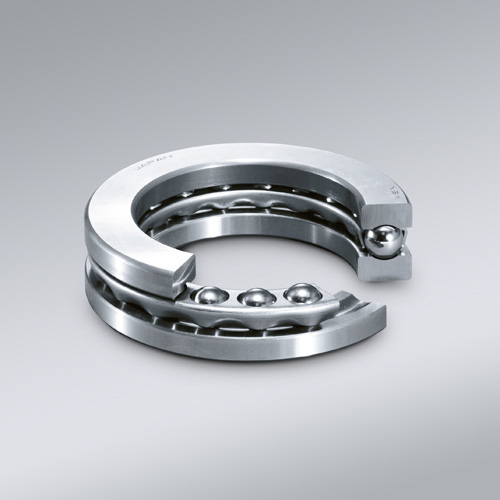
 Thrust ball bearingsCharacteristics and uses of thrust ball bearings:
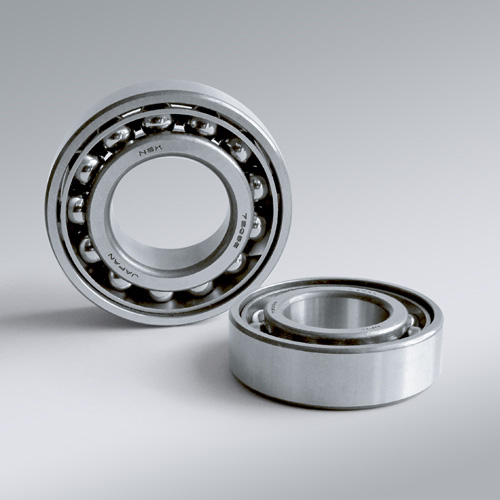
Plane thrust ball bearings are divided into unidirectional and bidirectional types. Unidirectional plane thrust ball bearings are steel balls installed between a set of raceways. The contact angle is generally 90°. They can only withstand unidirectional axial loads and are not suitable for high-speed rotation. This type of bearing can be separated into three pieces, commonly known as three-piece bearings. Both gaskets have arc-shaped deep grooves for ball rolling. Angular contact ball bearingsCharacteristics and uses of angular contact ball bearings:
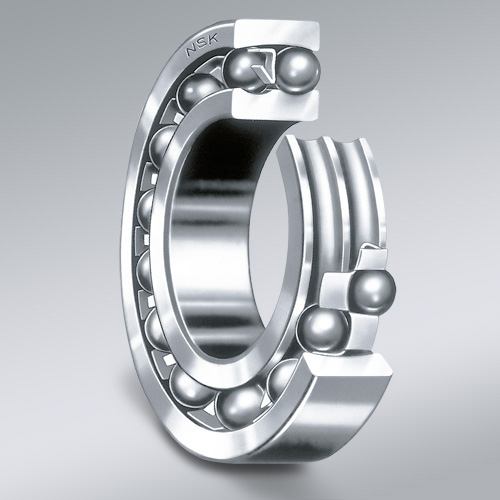
Angular contact ball bearings have a higher maximum speed limit and can bear radial and axial loads at the same time, as well as pure axial loads. Their axial load capacity is determined by the contact angle and increases with the increase of the contact angle. Self-aligning ball bearingsCharacteristics and uses of self-aligning ball bearings:
The inner ring of the self-aligning ball bearing has two raceways, and the raceway of the outer ring is spherical, and the center of curvature of the spherical surface is consistent with the center of the bearing. Therefore, the inner ring, ball and cage can be tilted freely relative to the outer ring. Therefore, the deviation caused by the processing error of the outer shell can be automatically adjusted.
Navigation
Send Us A Message
consult

Jinan Lanyu Import & Export Co., Ltd. is a bearing manufacturing enterprise specializing in the import and export trade of bearings. Covering a total area of 50,000 square meters, the company boasts an annual production capacity exceeding 20 million sets and is dedicated to the manufacture of high-quality bearings.

First class quality service and professional after-sales team.
Get in Touch
*We respect your confidentiality and all information are protected.
