


If you are choosing between ZZ vs 2RS deep groove ball bearings, the short answer is simple: choose ZZ when speed is higher, operating conditions are relatively clean, and low friction matters more; choose 2RS when dust, moisture, or contamination is the bigger risk. Most selection mistakes happen because people focus only on sealing style and ignore the real working environment. In bearing applications, that detail often decides service life more than the brand name does.
Many buyers assume ZZ and 2RS are interchangeable because the bearing size is the same. In practice, they behave differently once installed. That difference shows up in temperature rise, grease retention, running torque, and how well the bearing survives dirt and splash exposure.
Jinan Lanyu works in bearing manufacturing and import-export trade, with deep groove ball bearings as one of its core product lines alongside self-aligning ball bearings and cylindrical roller bearings. In day-to-day bearing selection, this ZZ vs 2RS question comes up often because it sits right at the point where cost, operating conditions, and maintenance expectations meet.
What ZZ and 2RS actually mean
A ZZ deep groove ball bearing uses metal shields on both sides. These shields do not fully contact the inner ring, so they mainly help block larger particles and reduce grease loss. They are useful where the environment is reasonably clean and the bearing needs to run freely.
A 2RS bearing uses rubber seals on both sides. These seals contact, or closely seal against, the inner ring depending on design. That gives better protection against fine dust, moisture, and contaminated surroundings, but it also adds more friction than a shielded type.
That is the real starting point in the ZZ vs 2RS deep groove ball bearings comparison: metal shields favor speed and lower drag, while rubber seals favor protection.
Where the real difference shows up in use
On paper, the difference may look minor. On a machine, it is not.
ZZ bearings usually run with lower friction and lower starting torque. That makes them a common fit for electric motors, fans, light-duty conveyor rolls, and other equipment where the surrounding air is fairly clean. They also tend to be preferred when heat buildup from seal drag needs to be limited.
2RS bearings are usually the safer option for agricultural equipment, food processing support units outside the wash zone, outdoor machinery, wheel-related applications, and dusty workshop equipment. If fine contamination gets into the raceway, the bearing can fail early even if the load is modest. In those cases, the extra sealing protection is often worth more than the slight speed advantage of ZZ.
There is also a maintenance angle. A 2RS bearing keeps grease in and contamination out more effectively, so it often helps in applications where relubrication is limited or neglected. A ZZ bearing can still perform very well, but it asks for a cleaner operating context.
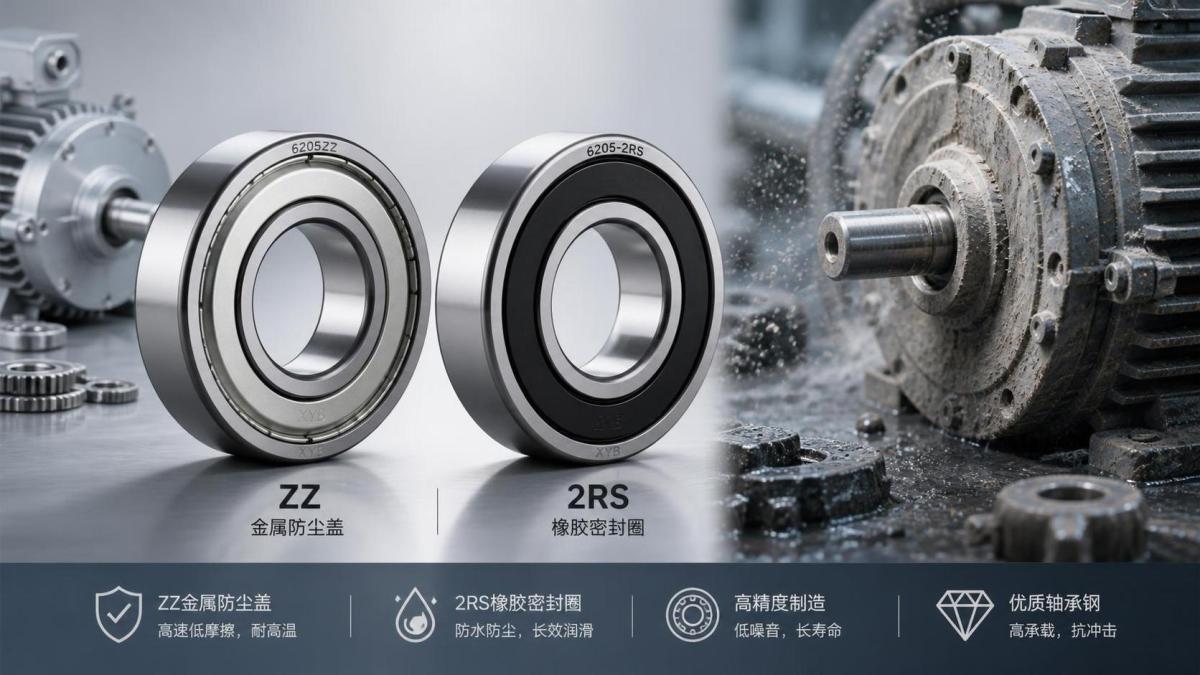
ZZ vs 2RS deep groove ball bearings: which one should you choose?
A practical rule is this: if contamination is your first concern, choose 2RS. If rotational speed and low torque are your first concern, start with ZZ.
That said, a few details deserve attention before making a decision:
- Dust level: Fine dust is more damaging than many users expect. It does not need to be visible in large amounts to shorten bearing life.
- Water or humidity: If there is washdown, splash, condensation, or outdoor storage, 2RS is usually the safer choice.
- Speed requirement: For higher-speed applications, shielded bearings often have an advantage because seal drag is lower.
- Temperature sensitivity: Added friction from seals can matter in compact units where heat dissipation is already limited.
- Service philosophy: If the machine is expected to run long intervals with little attention, better sealing is often the more forgiving option.
One common mistake is choosing ZZ just because the application is indoors. Indoor does not always mean clean. Wood dust, grinding debris, textile lint, and metal fines can be enough to justify 2RS.
Another mistake goes the other way. Some users specify 2RS for every application by default. That can be overly conservative in high-speed equipment where lower friction and smoother running are more valuable than maximum sealing.
What buyers often overlook
The seal type is only part of the story. Internal clearance, grease type, speed rating, operating temperature, shaft fit, and housing accuracy still matter. A well-chosen 2RS bearing can fail early if it is installed with impact through the rolling elements. A ZZ bearing in the right application can also underperform if contamination enters during assembly.
This is why installation practice should not be treated as a side issue. Even for standard deep groove ball bearings, poor mounting causes a surprising share of early problems. When fitting bearings across multiple brands, a tool such as SKF TMFT36 Bearing fitting tool kit can be a sensible option for more precise installation. Its impact-resistant polyamide construction and compatibility with brands such as NSK, KOYO, NACHI, NTN, and TIMKEN make it relevant where clean, controlled fitting is needed. That matters whether you finally choose ZZ or 2RS.
If you are buying for export projects or replacement stock, this point becomes even more practical. The best bearing on paper is still the wrong bearing if it gets damaged during handling or mounted with force applied to the wrong ring.
Typical application thinking
For small electric motors, office equipment drives, or enclosed fan assemblies, ZZ is often a logical choice because the environment is controlled and low running resistance is useful.
For farm machinery, packaging lines exposed to dust, garage-door rollers, small wheel hubs in light-duty setups, or equipment stored in humid places, 2RS often gives better real-world life.
If the application sits in the middle, and many do, ask one question first: what is more likely to kill this bearing early, speed-related heat or contamination? That question usually brings the answer into focus faster than reading catalogue abbreviations alone.
A quick note on procurement
When sourcing bearings internationally, buyers often compare only dimensions and price. That is not enough. Ask for confirmation of sealing type, grease fill, and application recommendation. In import-export work, especially across mixed equipment fleets, small spec mismatches create expensive confusion later.
For companies handling varied industrial demand, this is where supplier experience matters. Jinan Lanyu supports bearing supply across core categories including deep groove ball bearings, self-aligning ball bearings, and cylindrical roller bearings, which helps when customers need a more application-based recommendation rather than a simple catalogue match.
FAQ
Is 2RS always better than ZZ?
No. 2RS is better for contamination control, but not automatically better for high-speed or low-friction applications.
Can I replace a ZZ bearing with a 2RS bearing of the same size?
Sometimes yes, dimensionally. But you should still check speed, torque, temperature, and sealing needs before swapping.
Which lasts longer, ZZ or 2RS?
It depends on the environment. In dirty or damp conditions, 2RS often lasts longer. In clean, high-speed service, ZZ may be the more suitable design.
Are ZZ bearings sealed against water?
Not in the same way as rubber-sealed bearings. ZZ shields offer limited protection and are not the first choice where water ingress is likely.
Does installation affect both types equally?
Yes. Incorrect mounting can damage either type before the machine even starts running.
In the end, the ZZ vs 2RS deep groove ball bearings decision is less about which type is “better” and more about which failure risk you are trying to control. If the machine runs fast and clean, ZZ is often the right call. If dust, moisture, or neglected maintenance are part of the picture, 2RS is usually the smarter choice.
Image Placeholder List
- - Suggested placement: after the section discussing real-use differences; Suggested image: side-by-side visual comparison of ZZ metal shields and 2RS rubber seals, plus typical clean vs dusty application examples; Alt text: “ZZ vs 2RS deep groove ball bearing seal structure and application comparison”
Internal Link Anchor Text Suggestions
- Deep groove ball bearing selection guide: category page or technical guide
- How to choose bearing seals for dusty environments: blog or resource page
- Self-aligning ball bearings vs deep groove ball bearings: comparison article
- Common bearing installation mistakes: tutorial page
- Cylindrical roller bearing applications: product category or guide page
External Authority Source Suggestions
- Brand official technical documents from major bearing manufacturers
- Industry association engineering references on bearing selection and maintenance
- Academic or technical training materials covering rolling bearing sealing and lubrication
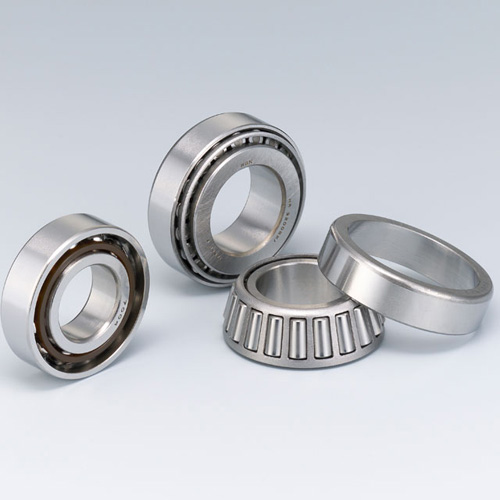
 Tapered roller bearingsCharacteristics and uses of tapered roller bearings:
Tapered roller bearings are mainly suitable for bearing radial and axial combined loads dominated by radial loads, while large-cone-angle tapered roller bearings can be used to bear radial and axial combined loads dominated by axial loads. This type of bearing is a separable bearing, and its inner ring (including tapered rollers and retainers) and outer ring can be installed separately. The radial clearance and axial clearance of the bearing can be adjusted during installation and use, and it can also be installed with pre-interference. Self-aligning ball bearingsCharacteristics and uses of self-aligning ball bearings:
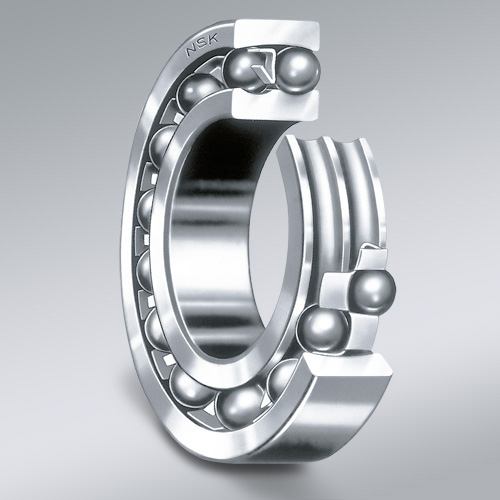
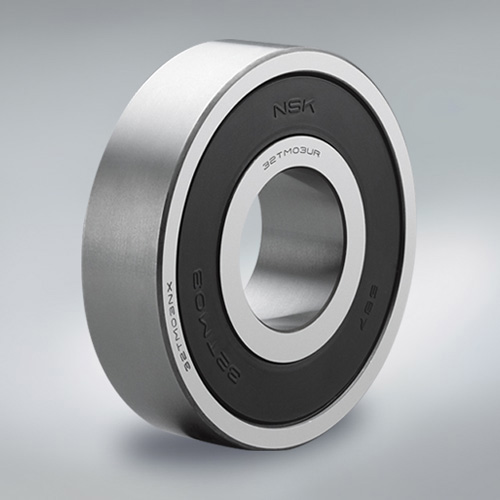
The inner ring of the self-aligning ball bearing has two raceways, and the raceway of the outer ring is spherical, and the center of curvature of the spherical surface is consistent with the center of the bearing. Therefore, the inner ring, ball and cage can be tilted freely relative to the outer ring. Therefore, the deviation caused by the processing error of the outer shell can be automatically adjusted. Deep groove ball bearingsDeep groove ball bearings mainly bear radial loads, and can also bear radial loads and axial loads at the same time. If the deep groove ball bearing has a large radial clearance, it has angular contact performance.
Product introduction:
Navigation
Send Us A Message
consult

Jinan Lanyu Import & Export Co., Ltd. is a bearing manufacturing enterprise specializing in the import and export trade of bearings. Covering a total area of 50,000 square meters, the company boasts an annual production capacity exceeding 20 million sets and is dedicated to the manufacture of high-quality bearings.

First class quality service and professional after-sales team.
Get in Touch
*We respect your confidentiality and all information are protected.
